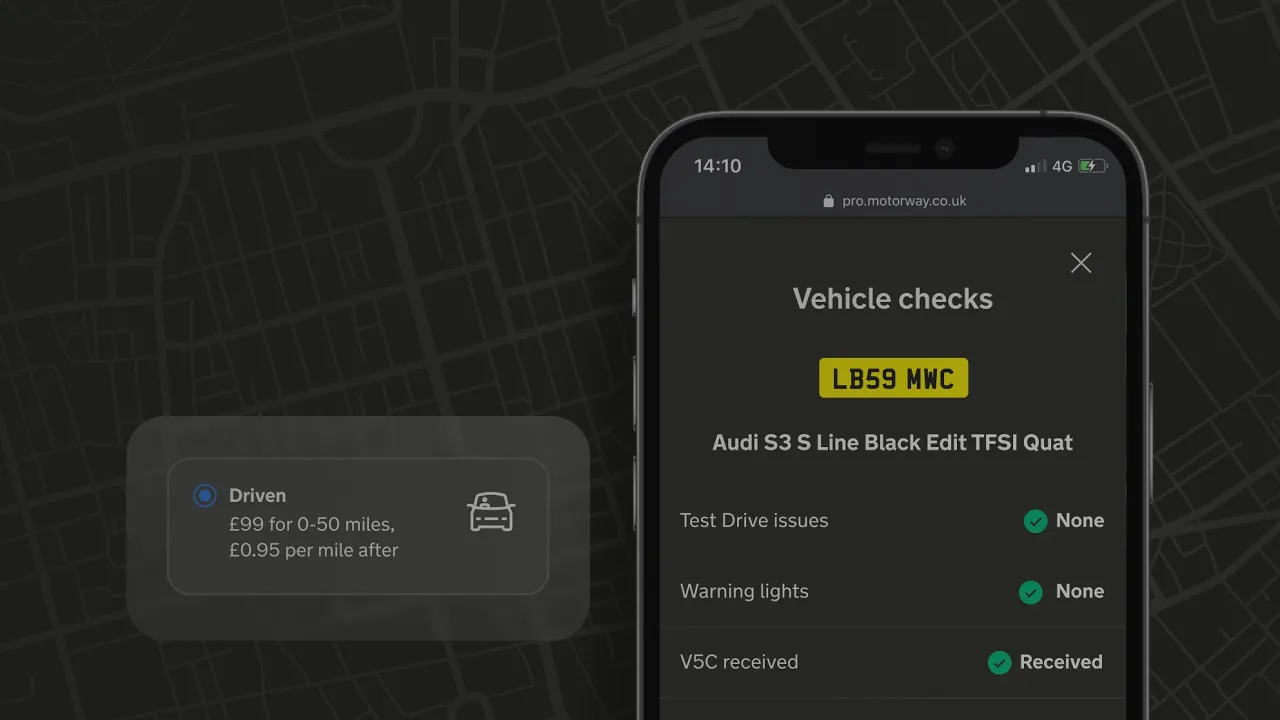
A 0→1 initiative to build a mobile experience that reduced uncertainty and increased seller confidence. The last-mile journey was riddled with poor reviews, missed expectations, and critical gaps in communication.
Overview
Company
Motorway
Date
8 months (Discovery → iOS launch)
Role
Senior Product Designer
Team
PM, 2 iOS Engineers, Backend Engineer, CX Lead, Transport Ops Lead
Impact
• 50 % faster inspections • 90 % driver adoption in the first month • 19 000+ collections completed via the app • 30 % drop in collection‑related support tickets
The problem
Inconsistent inspections
Drivers lacked access to seller‑submitted data or a clear workflow.
Seller surprises
Undeclared damage found on‑site led to last‑minute price drops (“chipping”).
Zero visibility for Motorway
We couldn’t audit quality or intervene when things went wrong.
Growing pain
Negative Trustpilot reviews and support tickets were rising month‑on‑month.
Discovery & Insights
This project demanded a deeply collaborative and iterative design approach, focused on understanding the complex nuances of vehicle inspections and handovers. My process aimed to transform a fragmented, unrecorded interaction into a streamlined, high-quality, and data-rich experience.
To truly understand the "last mile" problem, our discovery phase went beyond surface-level observations, seeking to uncover critical pain points and business opportunities.
Real-life shadowing: We initiated the process by directly observing vehicle collections and inspections in diverse real-world scenarios. This hands-on approach provided invaluable insights into the existing third-party driven process, revealing critical inconsistencies, operational bottlenecks, and the variable quality of handovers that impacted seller trust and brand perception.
Stakeholder & User Interviews (Drivers & Dealers): We conducted in-depth interviews with both inspection drivers and dealer partners. The goal was to understand their daily workflows, specific requirements, core pain points, and "deal-breakers" related to vehicle inspections and data exchange.
Competitive Analysis & Market Due Diligence: We analysed existing industry applications and best practices for vehicle inspection and asset management. This allowed us to benchmark against successful features, identify areas for innovation, and learn from common pitfalls in other systems, ensuring our solution was robust and user-centric.
The guided workflow
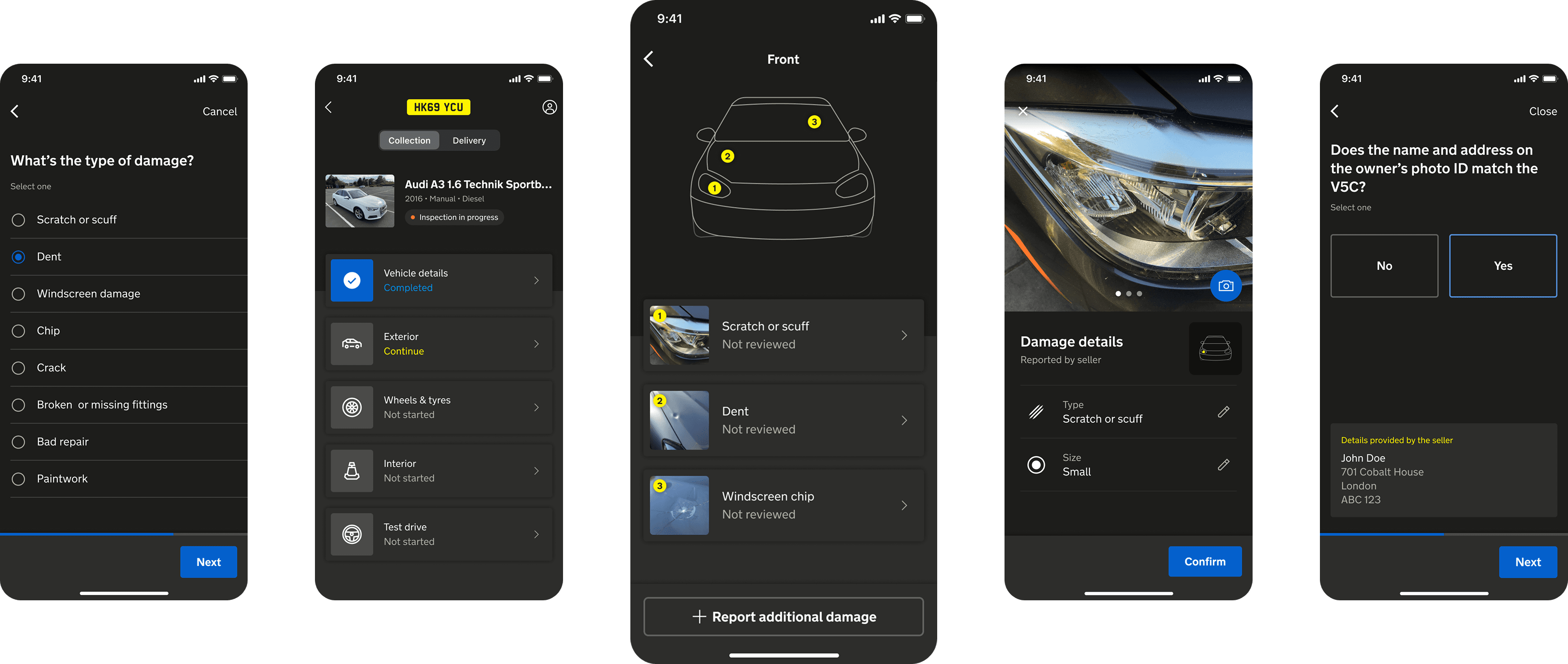
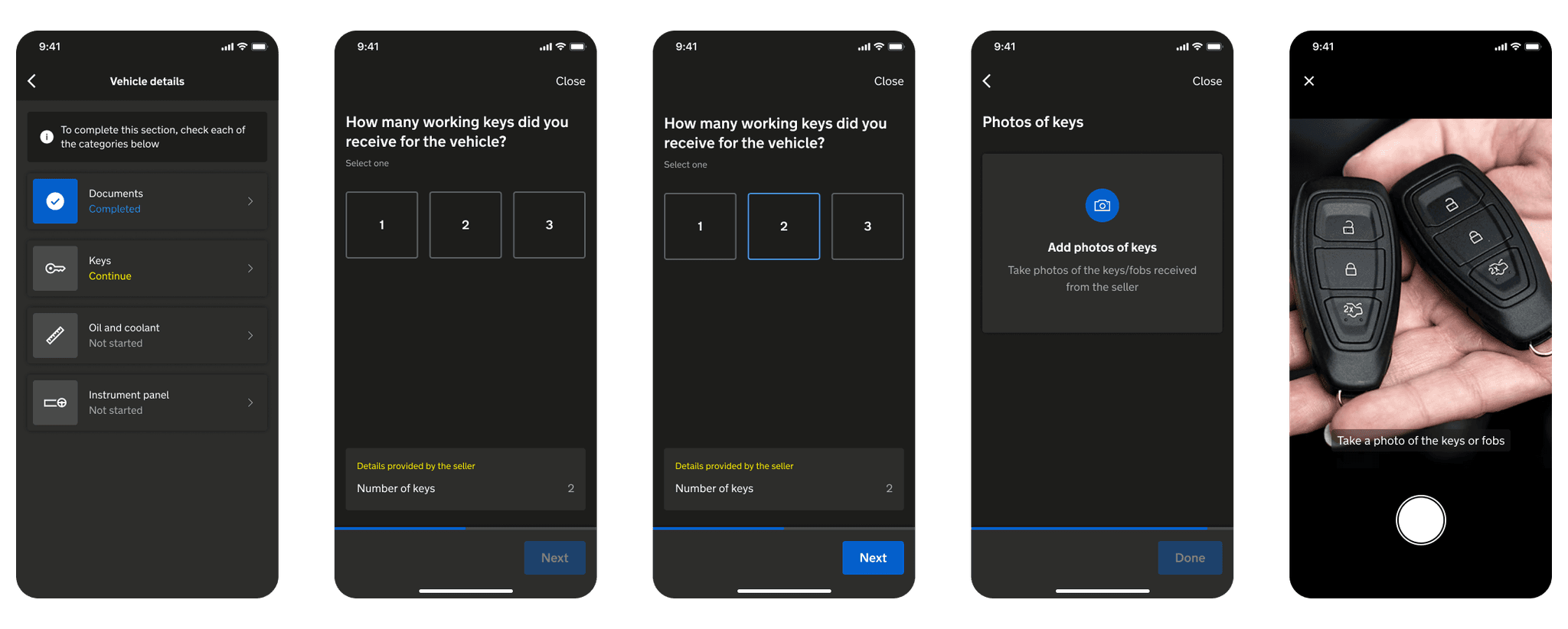
To solve one of the most persistent issues uncovered during discovery, inconsistent inspections, we introduced a guided workflow to support both new and returning drivers.
This step-by-step process helps ensure collections are carried out methodically, reducing user error and improving data quality. Each step aligns with the seller submitted profile, helping drivers validate key details (like the number of keys) and capture supporting evidence with photos.
By reducing ambiguity and guiding users through a structured checklist, we made inspections more consistent, helped reduce post-collection disputes, and supported new drivers in ramping up faster.
Damage reporting
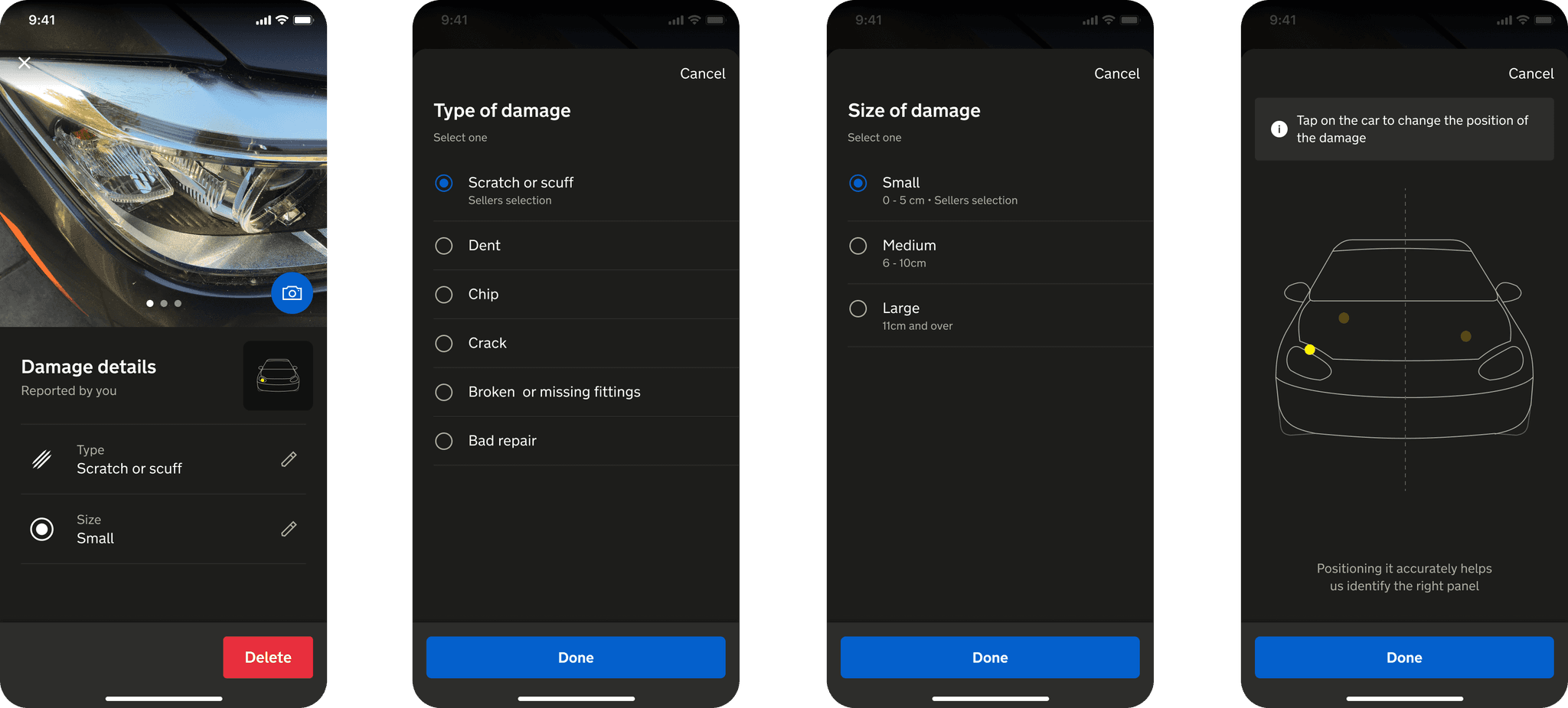
One issue we uncovered during driver interviews was the lack of standardisation in how damage was reported. Drivers used inconsistent language and descriptions, leading to confusion and follow-up calls from dealers seeking clarification.
We addressed this by introducing structured fields for type, size, and location of damage. Much like the seller flow, drivers were prompted to:
Select from predefined damage types and size
Pinpoint the exact location on a vehicle diagram
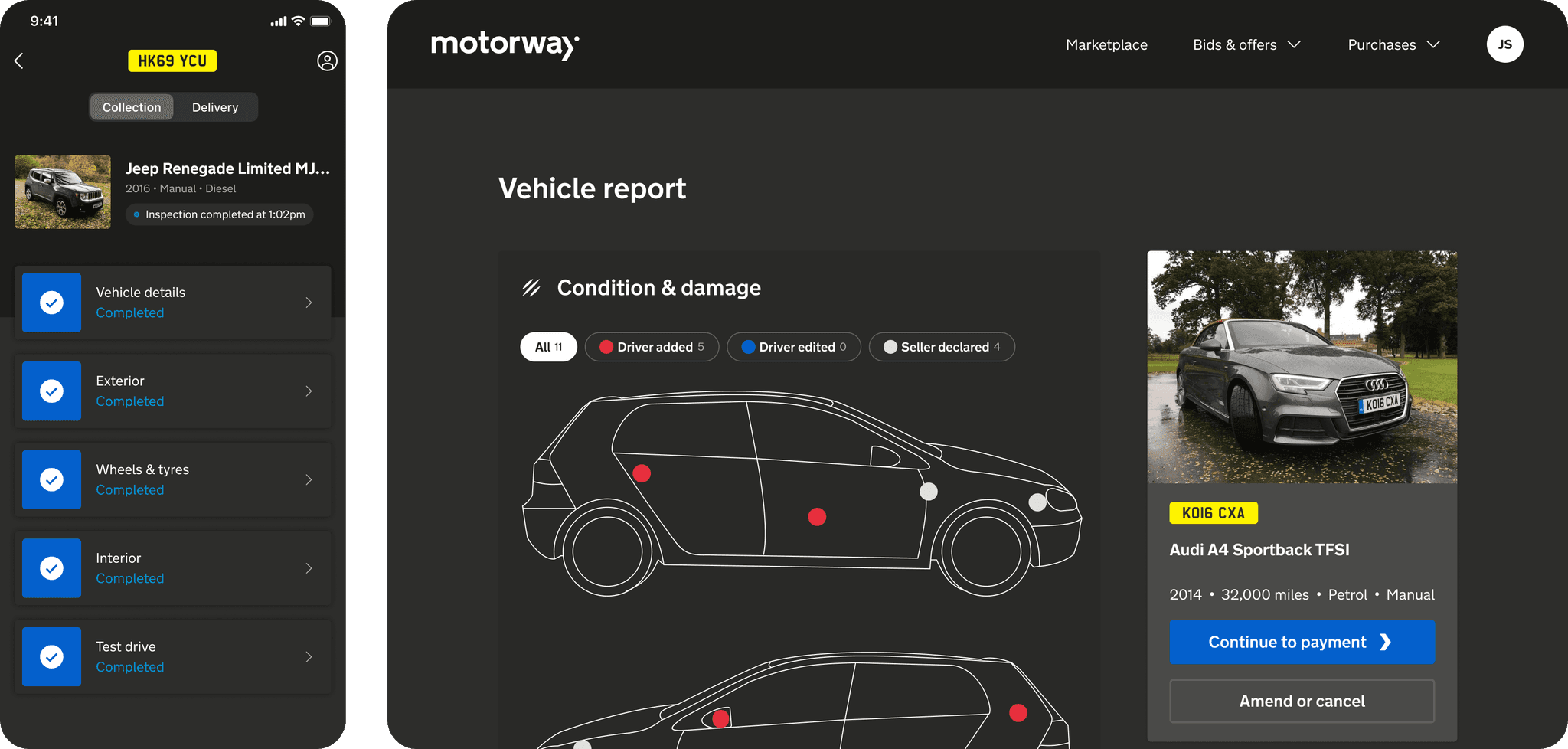
Compare against what the seller had already reported
This helped reduce duplicated entries, improved consistency between seller and driver reports, and gave dealers a clearer picture of the vehicle’s condition — without needing to chase further details.
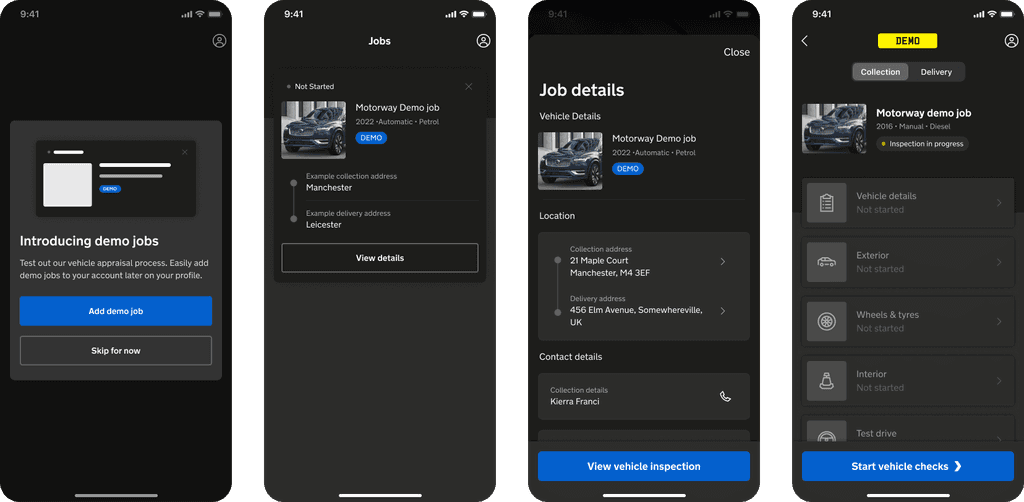
Demo jobs
Given the high turnover in the driver role and limited training available, many drivers arrived at their first collection with no real hands-on experience using the app. This often led to delays and confusion, right at the moment when sellers were expecting a smooth, professional handover.
To solve this, we introduced demo jobs: a fully interactive, no-risk version of a real collection. Drivers could run through the entire experience using a test vehicle, giving them space to explore the app, make mistakes, and build confidence before heading out on real jobs.
This also became a valuable tool for support teams. Without a dedicated driver-facing tech team, internal customer service and transport ops teams used demo jobs to troubleshoot issues and guide drivers more effectively.