A 0→1 redesign that lets more cars go straight to auction without human intervention.

Overview
When I joined this project, every car listed on Motorway had to be approved over the phone by an agent before it could enter the daily auction. That single step governed our growth curve: we could only add as many new listings as we could hire and train agents.
My brief was simple but sweeping: lift the ceiling by letting more cars bypass the call altogether. Over six months I led the work end-to-end as the sole designer, partnering with one PM and a lean engineering squad. By launch, we had shifted 5% of eligible sellers onto a self-serve path, unlocking roughly 2,000 new pieces of inventory and revenue that no longer depended on headcount.
Company
Motorway
Date
6 months (Discovery → iOS launch)
Role
Senior Product Designer
Goal
Increase “Agent-Free” listings, reduce reliance on CS agents
Impact
5% cars go straight to auction ( Currently being gradually increased )
Context & Problem
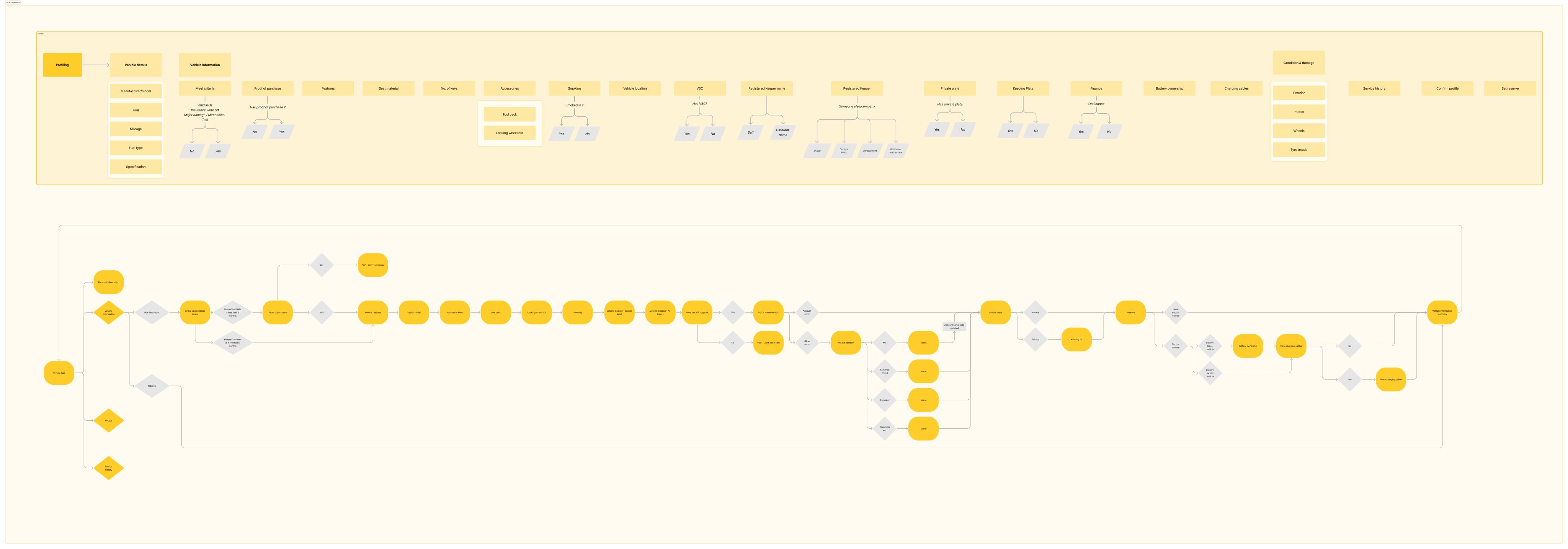
Motorway is a two-sided marketplace: sellers list their cars, dealers bid in a timed auction, and Motorway earns a fee on each successful match. The “agent call” was originally introduced to guarantee listing quality, but as volume soared, it became an operational choke point. Half of the profiled cars stalled there; some sellers grew impatient and dropped out, while others waited in a queue that agents struggled to clear.
Our hypothesis was straightforward: if we could make the online flow clear, motivating, and flexible enough to capture all the data an agent would normally tease out, then qualified cars could go straight to auction, and the business could scale independent of hiring.
Discovery & Insights
I began with a blend of analytics, field observation, and interviews:
Analytics showed a sharp funnel cliff at the call step, but didn’t explain why.
Ride-alongs with agents revealed first-time sellers feeling overwhelmed by jargon and paperwork.
Usability sessions exposed another blocker: car enthusiasts wanted to list every modification to justify a higher price, yet the form only offered eight outdated feature options.
In addition, observing sellers being asked for boot items before they’d even opened the boot, completion time spiked, and confidence dipped. The order of questions was increasing cognitive load at precisely the wrong moments.
Motivation through Milestones
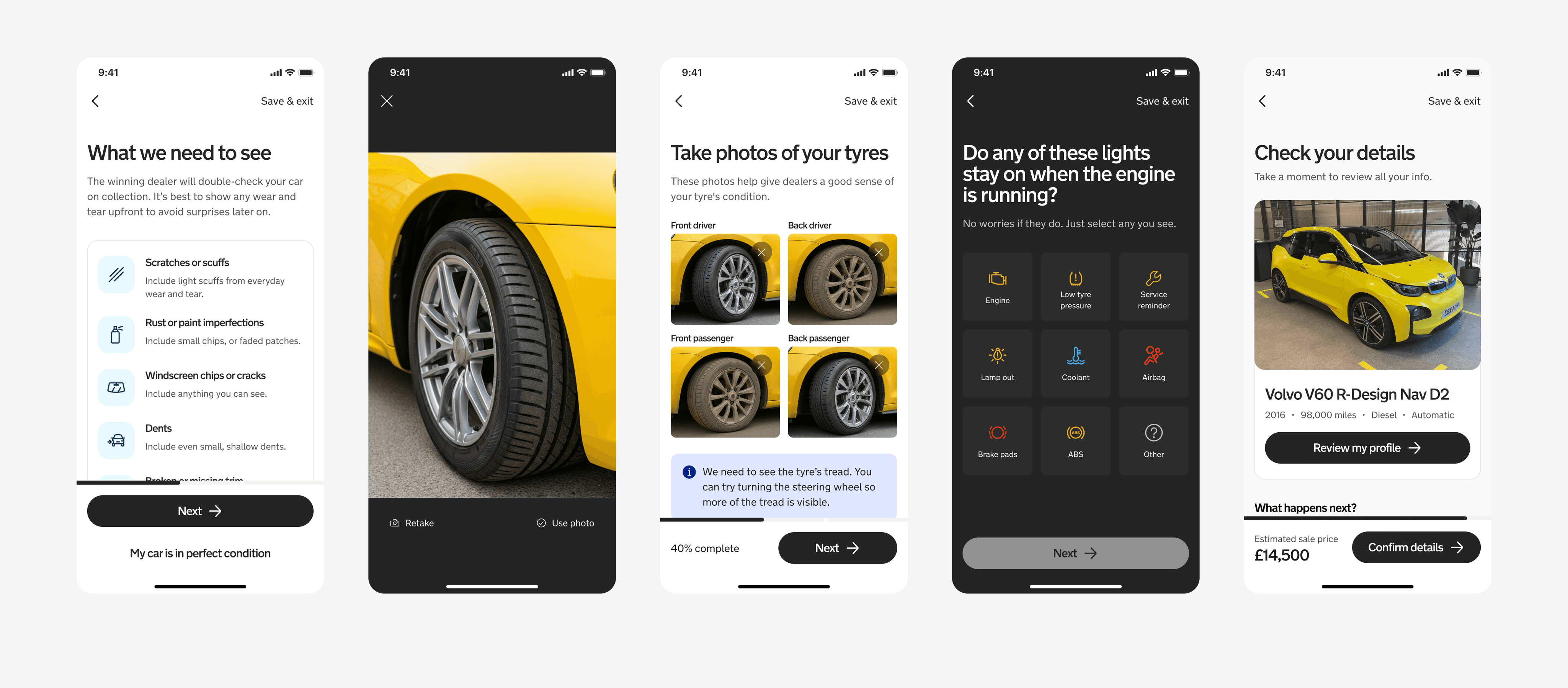
Instead of just a progress bar and a reassuring phone call, I added three clear checkpoints—Features, Photos, Ownership — each celebrated with a burst of micro-animation. Sellers now saw progress; completion rates climbed 30 % in our first prototype test. In addition to adding these 3 checkpoints, I wanted to ensure the flow felt continuous for users; we currently had a very stop-and-start user flow. In the absence of an agent, users are encouraged to go to the next step and complete the flow.

Feature capture, Upgraded
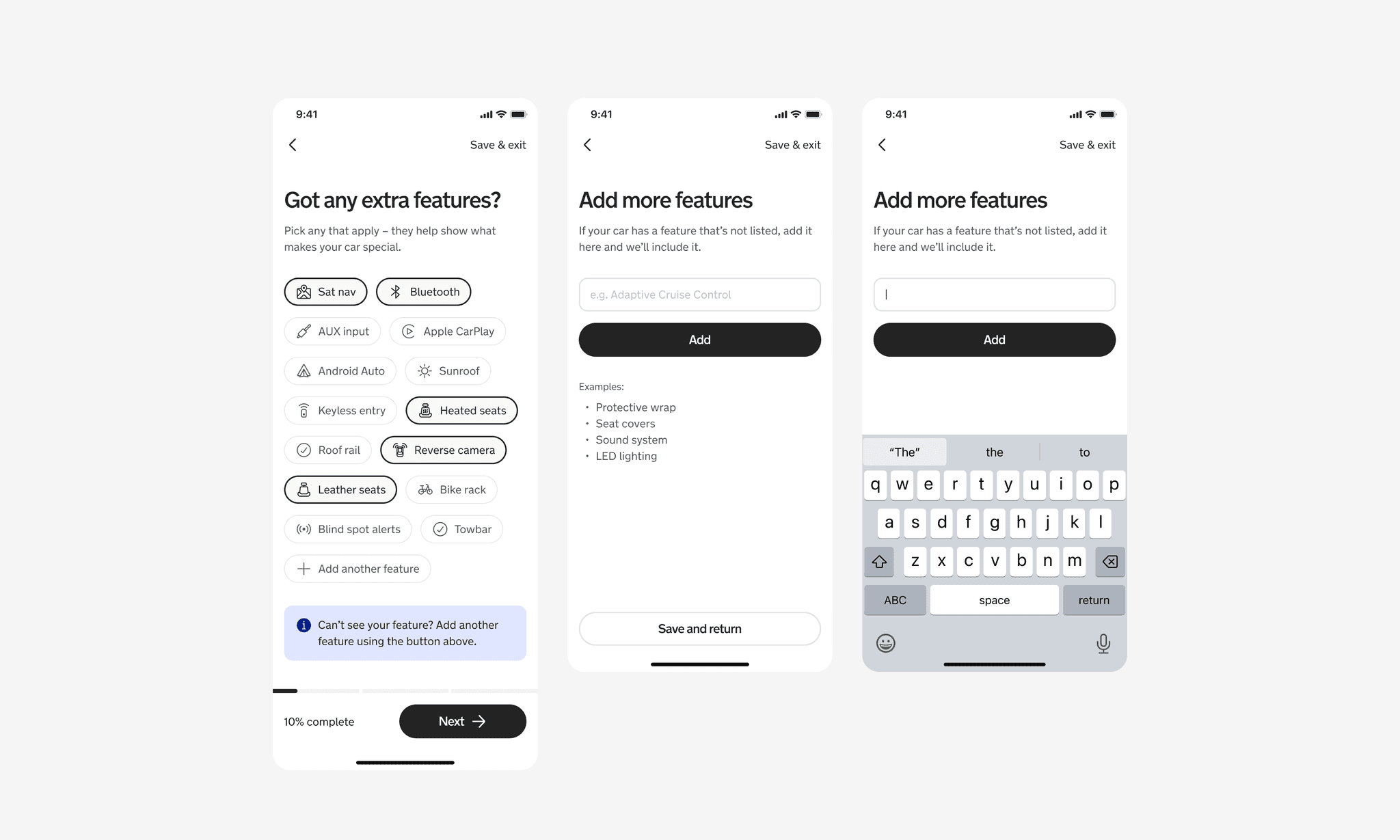
We used to limit sellers to a static list of just six features, which left detail-minded owners frustrated and constrained the data dealers relied on. I replaced that list with a dynamic chip system stocked with modern options and layered in natural-language input. Sellers can now type anything in plain English (“Neon door lights,” “Panoramic roof”), and lightweight AI instantly translates it into the right chips or flags it for review. The result is richer vehicle data for dealers and a moment of delight for sellers who feel their car is fully and fairly represented.
Contextual
Questioning
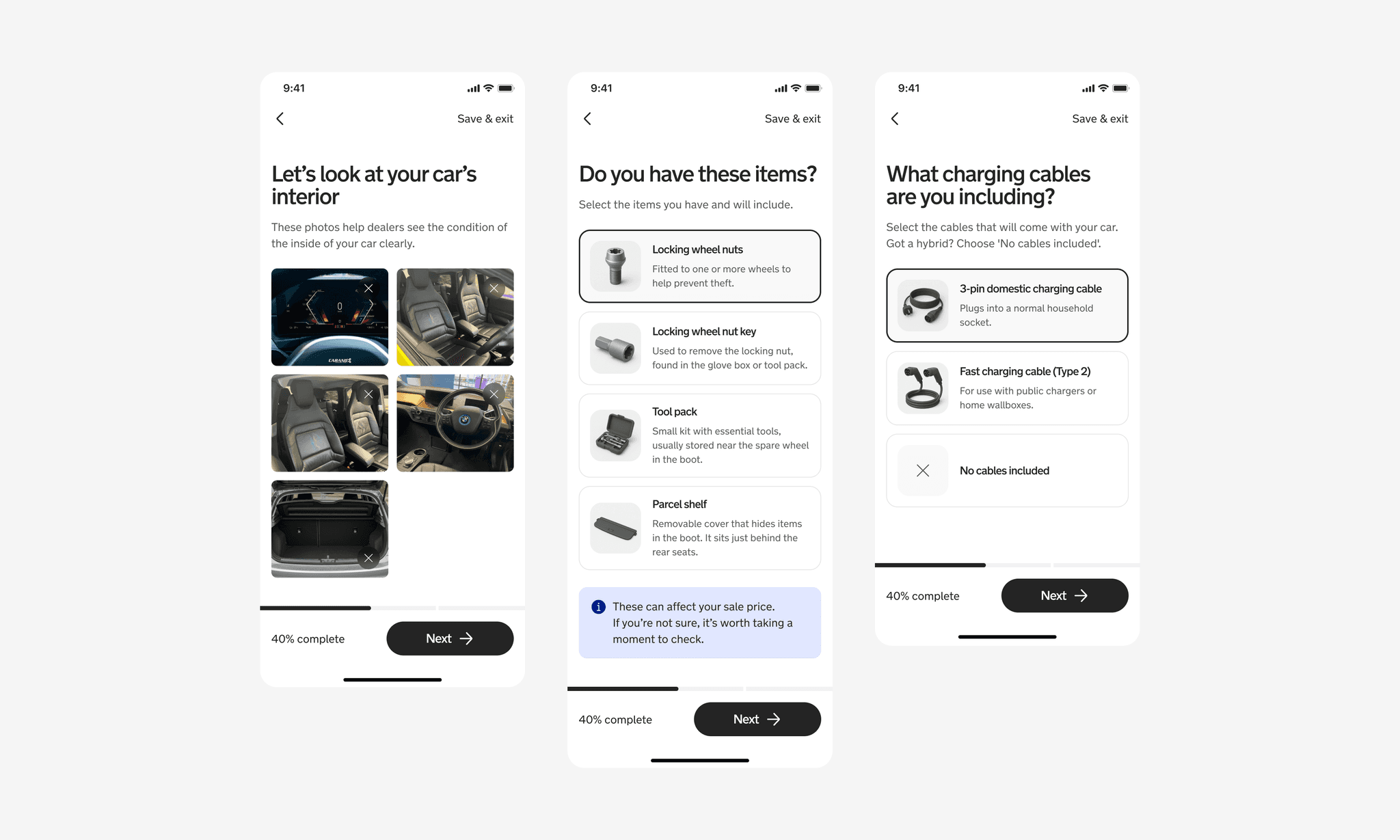
Examining the entire flow it became very clear that several questions being added later had not been done with a sellers physical context or location in mind. Questions about spare tyres, locking nuts, and boot items now appear while the users are on the interior step. Sellers answer with the object in front of them, reducing lookup frustration and cutting average profiling time by 40mins.
Reflection
Two lessons stick with me. First, progress psychology beats shorter forms: even when the number of required inputs stayed the same, framing them as milestones turned frustration into momentum. Second, discovery must extend beyond the product boundary; watching sellers fumble in their driveways taught us more than any in-app heatmap.
Looking ahead, I’d like to segment sellers up-front (first-timers vs. pros) and tailor the flow dynamically, pushing the self-serve share even higher without compromising data quality.