Improving Vehicle Collection Transparency at Motorway
When a Motorway seller's car was picked up, the driver had no access to what the seller had told us and no set way to inspect it. I designed the app that changed that, from first research to iOS launch.
Overview
Motorway is a two-sided marketplace that helps private car owners sell to a nationwide network of verified dealers. The digital journey worked well until a third-party driver arrived to collect the car. That offline hand-off was opaque, inconsistent and completely disconnected from our product.
Impact
50%
faster inspections
90%
of drivers using it in the first month
19,000+
collections done in the app
−30%
collection support tickets
Context
Everything up to the sale happened in our product. Then a third-party driver arrived to collect the car, and we lost sight of it.
Motorway helps people sell their car to a network of verified dealers. That last-mile hand-off was where things went wrong.
The problem
Four problems, all rooted in the same offline hand-off.
Inspections weren't consistent
Drivers couldn't see what the seller had declared, and there was no set process to follow.
Sellers got surprised
Damage found on the driveway led to last-minute price drops.
We couldn't see anything
There was no record to audit and no way to step in when a collection went badly.
It was getting worse
Negative reviews and support tickets were rising every month.
Research
We went out on real collections before designing anything.
Real collections
Watching drivers on the job showed the inconsistencies and bottlenecks first hand.
Drivers and dealers
We learned their routines, what they needed from an inspection, and their deal-breakers.
Other inspection apps
We looked at how other inspection and asset-management tools handled the same job.
Key design decisions
01
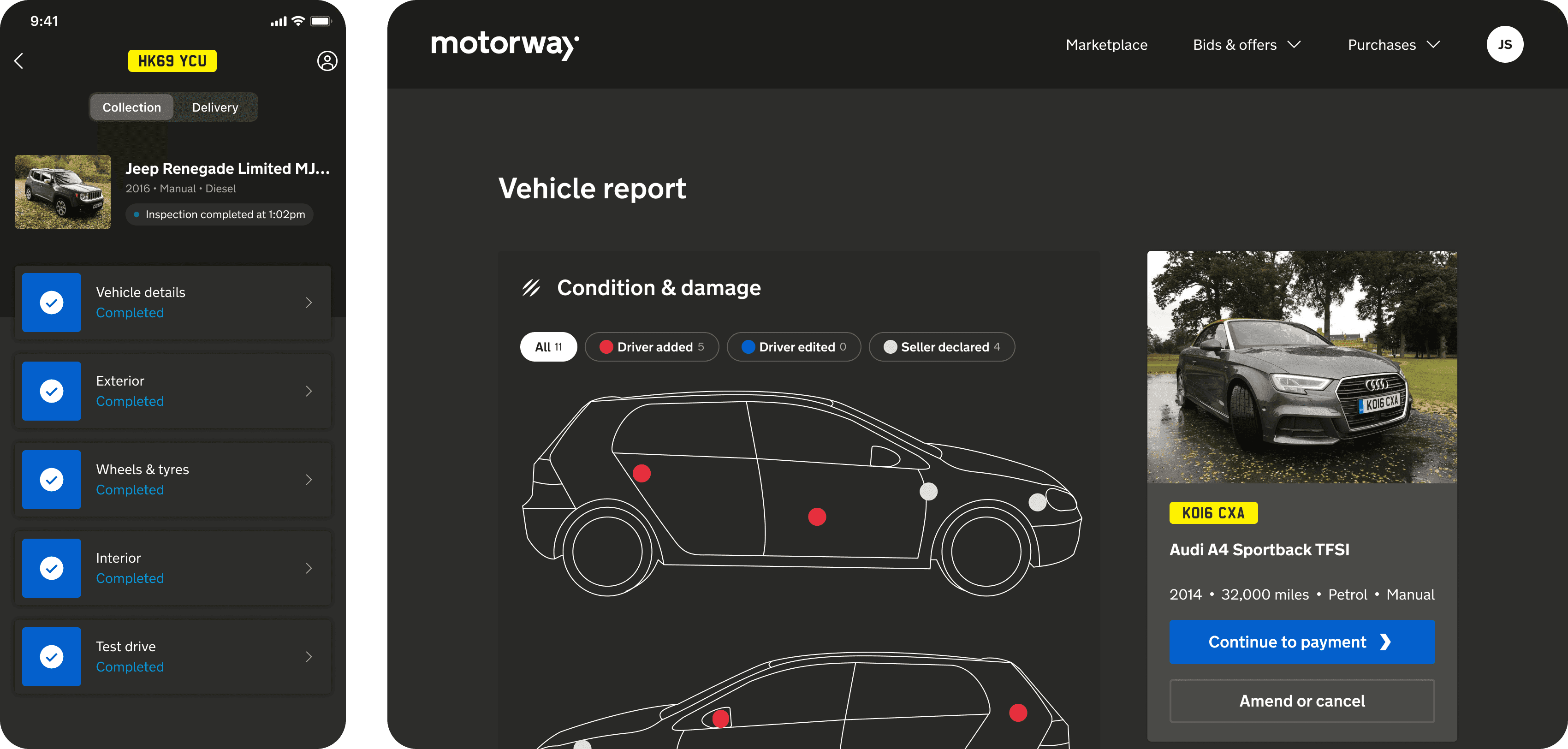
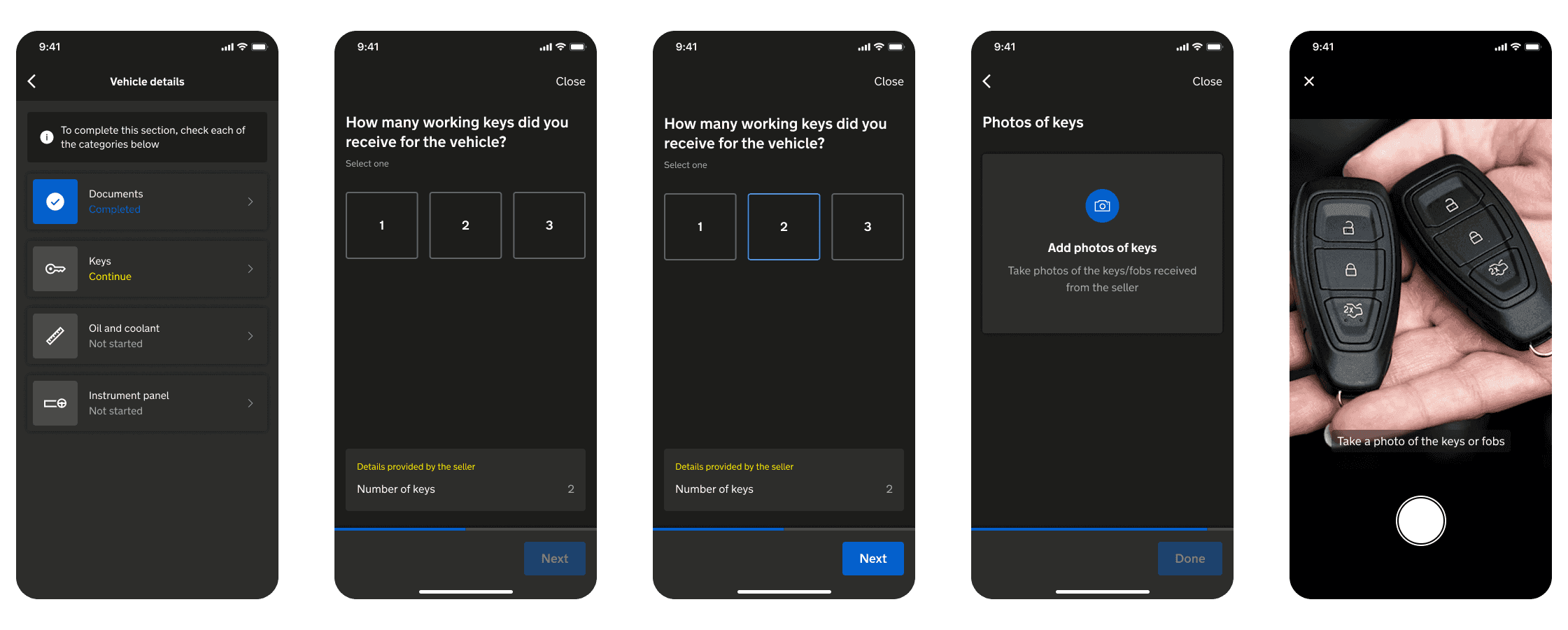
A guided inspection
- Problem
- Every driver inspected cars differently, with no access to what the seller had told us.
- Decision
- A step-by-step checklist built from the seller's own listing. Drivers confirm details like the number of keys and take photos as evidence.
- Outcome
- Inspections became consistent, disputes after collection dropped, and new drivers got up to speed faster.
02
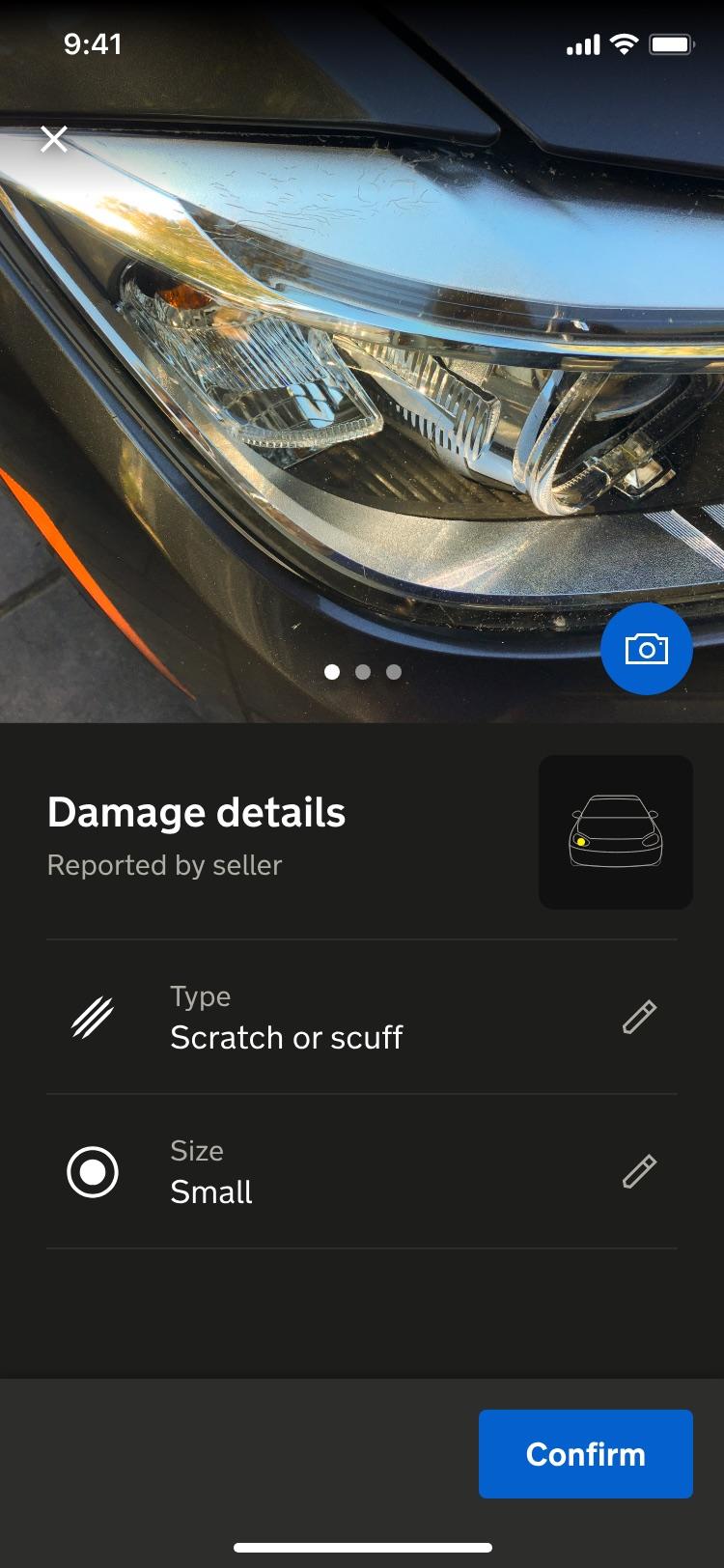
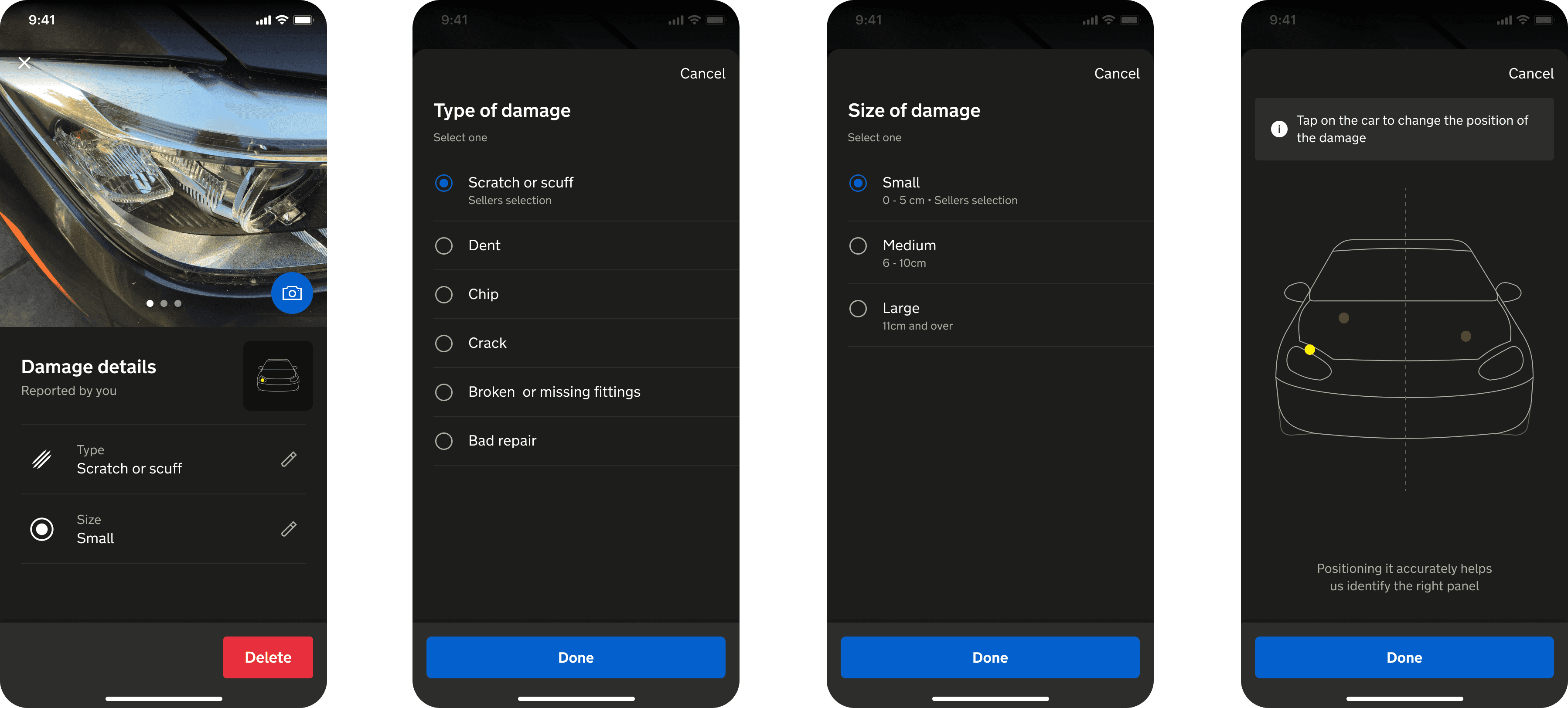
Damage, described one way
- Problem
- Drivers described damage in their own words, so dealers kept calling to ask what they meant.
- Decision
- Structured fields for type and size, a diagram to pin the exact spot, and an automatic comparison with what the seller declared.
- Outcome
- Dealers get a clear picture without chasing anyone.
03
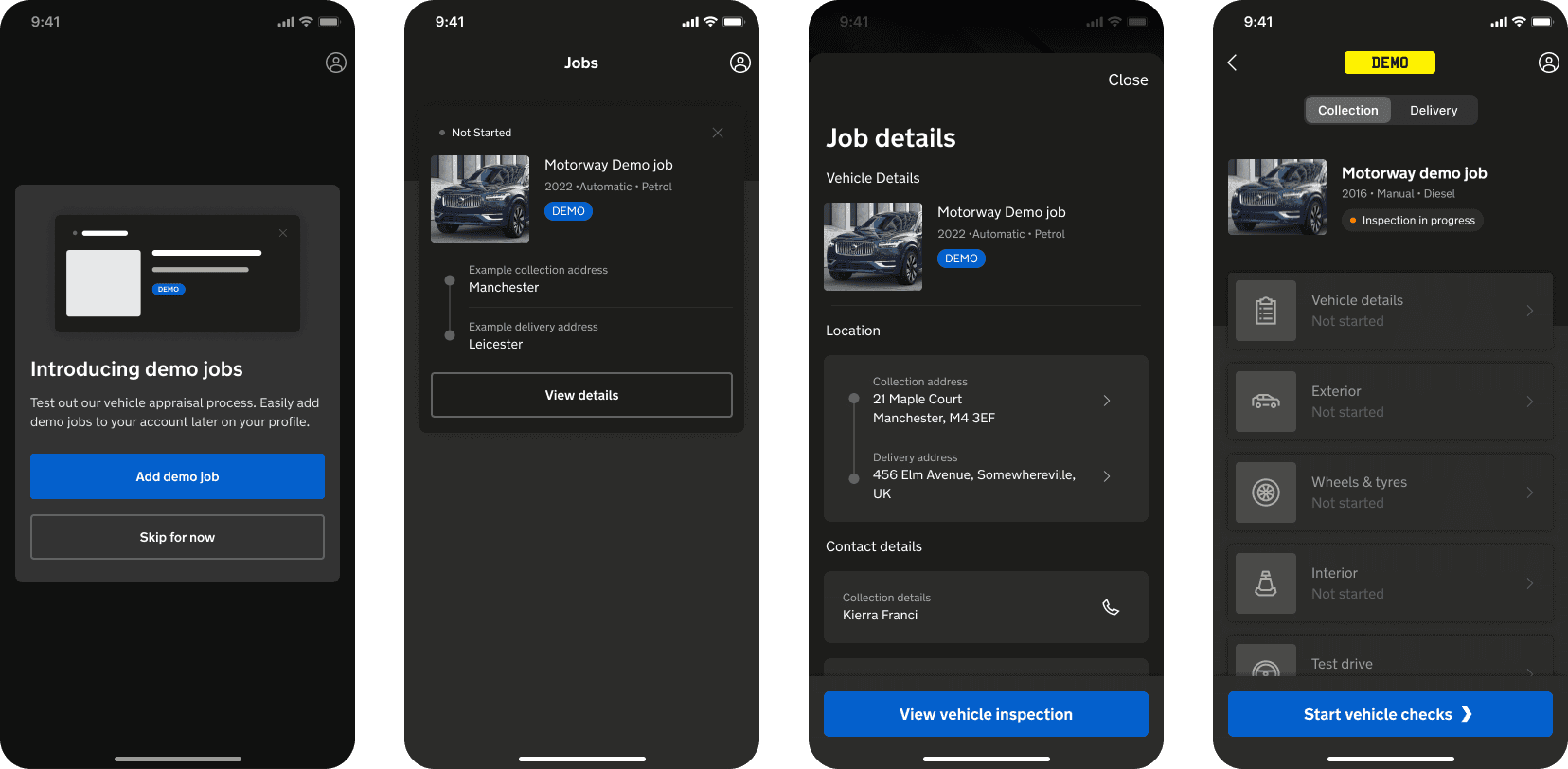
Demo jobs
- Problem
- High turnover and little training meant many drivers opened the app for the first time in front of a seller.
- Decision
- A full practice collection on a test car, with nothing at stake.
- Outcome
- Drivers arrived confident, and support and ops teams used demo jobs to walk drivers through problems.