From Agent-Led to Self-Serve: Scaling Motorway’s Seller Flow
Every car on Motorway needed a phone call with an agent before it could go to auction, so growth was capped by headcount. I redesigned the listing flow so more sellers could skip the call.
Overview
Motorway runs a daily online auction connecting private sellers with 5,000+ verified dealers. Every listing used to need a phone call with an agent before going live, an operational bottleneck that capped growth at the speed of hiring.
Impact
5%
of eligible cars now skip the agent call, and rising
~2,000
listings no longer tied to agent headcount
−40 min
average time to complete a listing
+30%
completion in the first prototype test
Context
Before a car could enter the daily auction, an agent had to approve it over the phone. As volume grew, that call became the bottleneck.
Sellers list their car, dealers bid in a daily auction, and Motorway takes a fee on each sale. Half the cars that started a listing stalled at the call, and some sellers gave up.
The bet: if the online flow could collect everything an agent would ask for, and keep people going without someone on the phone, good listings could go straight to auction.
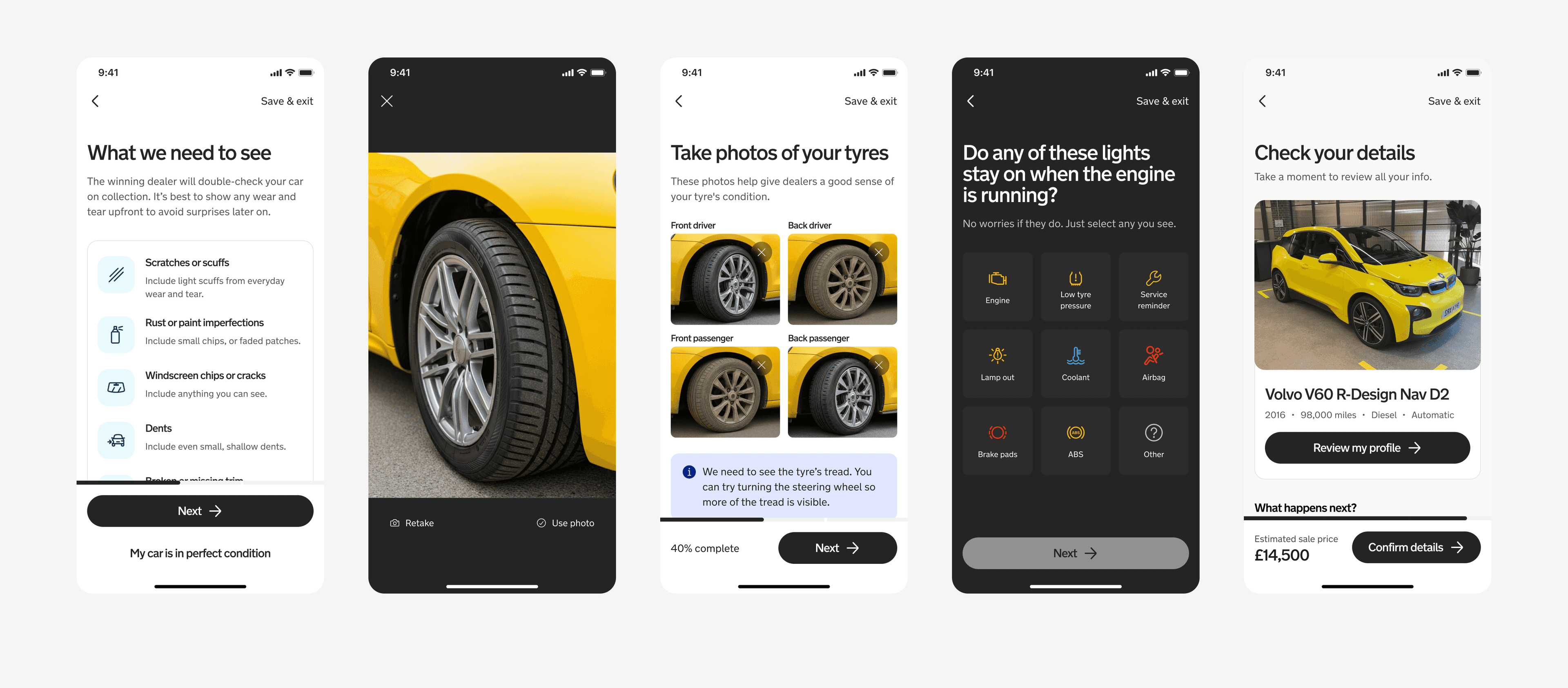
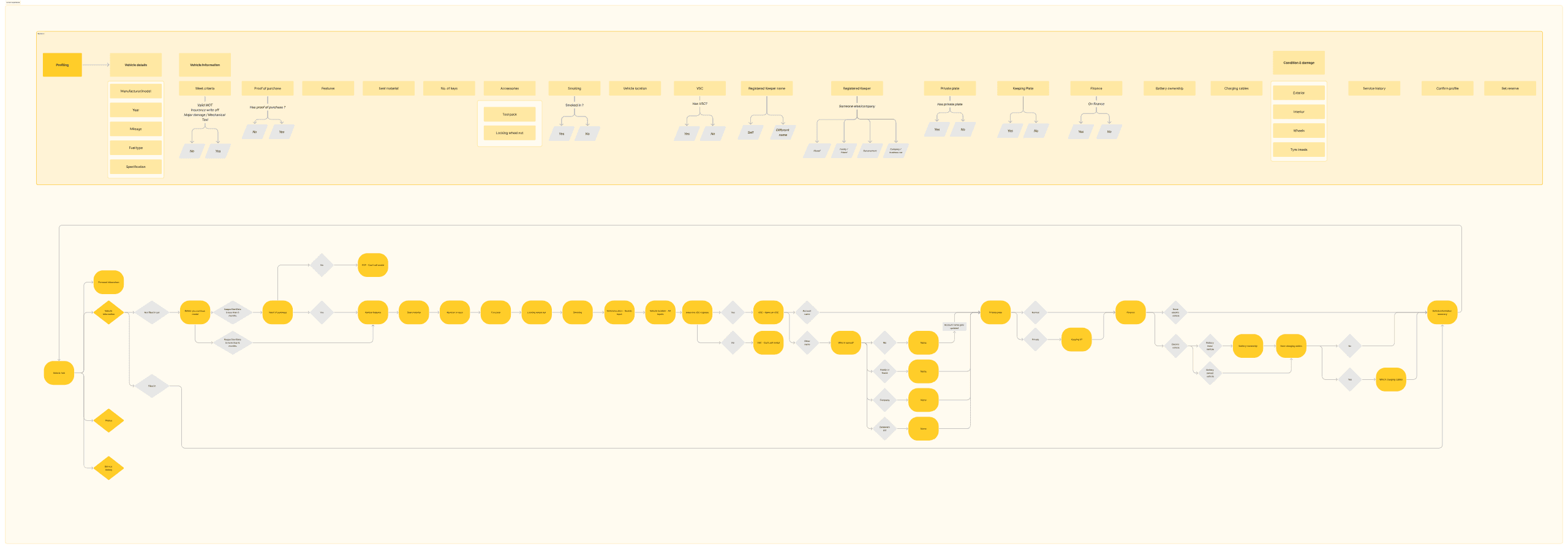
What we found
Analytics showed where people dropped off. Getting close to sellers showed why.
Jargon and paperwork
Sitting in on calls showed first-time sellers overwhelmed by terms and documents.
Enthusiasts held back
People wanted to list every upgrade to justify their price, and the form only had a short, dated list of options.
Questions in the wrong order
People were asked what was in the boot before they'd gone near the car.
Key design decisions
01
Milestones
- Problem
- With no agent on the phone, nothing kept sellers moving through a long, stop-start flow.
- Decision
- Three checkpoints, Features, Photos and Ownership, each with a small moment of celebration when done. The number of questions stayed the same.
- Outcome
- Completion went up 30% in the first prototype test.

02
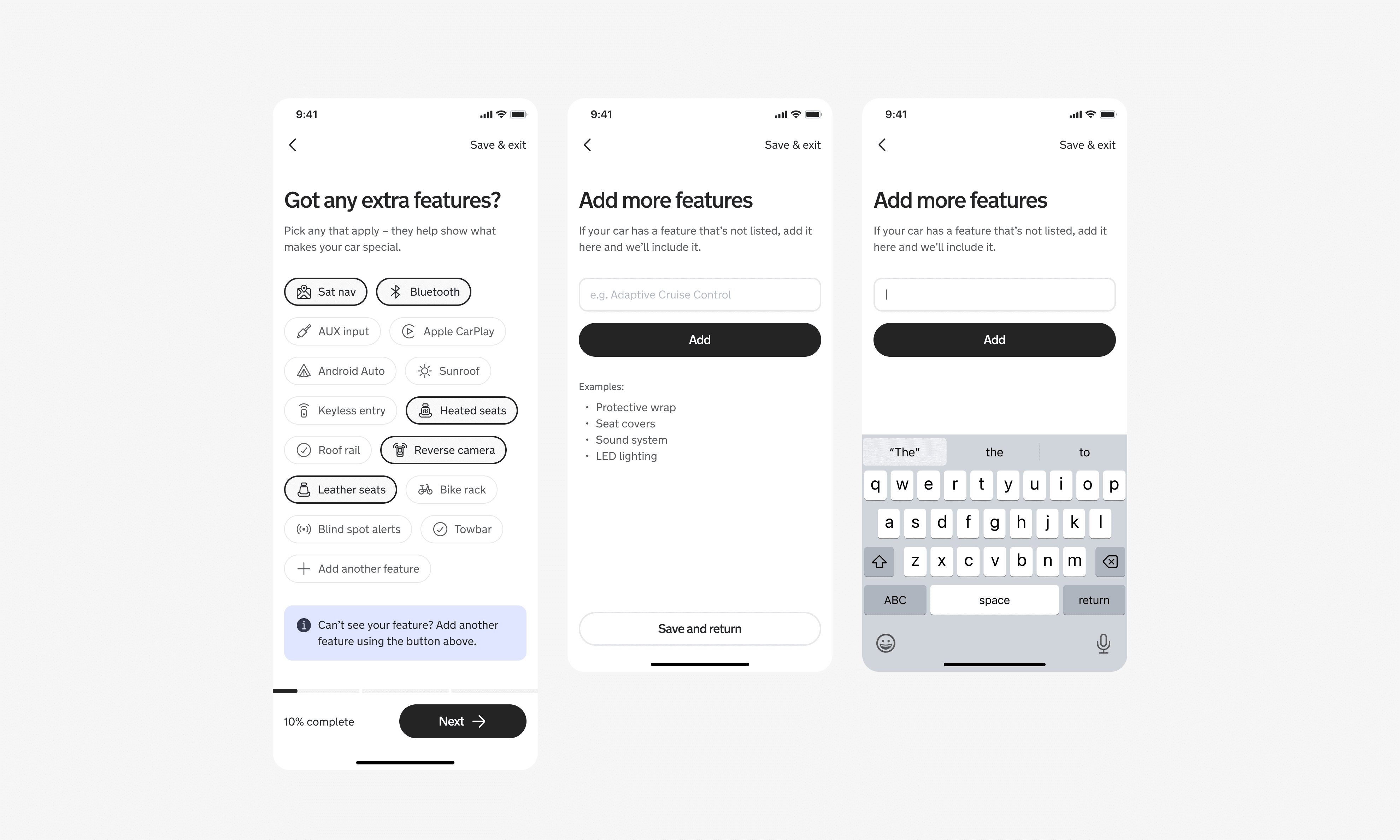
Features in plain English
- Problem
- A short, fixed list of features frustrated detail-minded owners and gave dealers poor data.
- Decision
- Chips plus a text box. Sellers type what they have, like "panoramic roof", and it's matched to the right chip or flagged for review.
- Outcome
- Better data for dealers, and sellers feel their car is properly described.
03
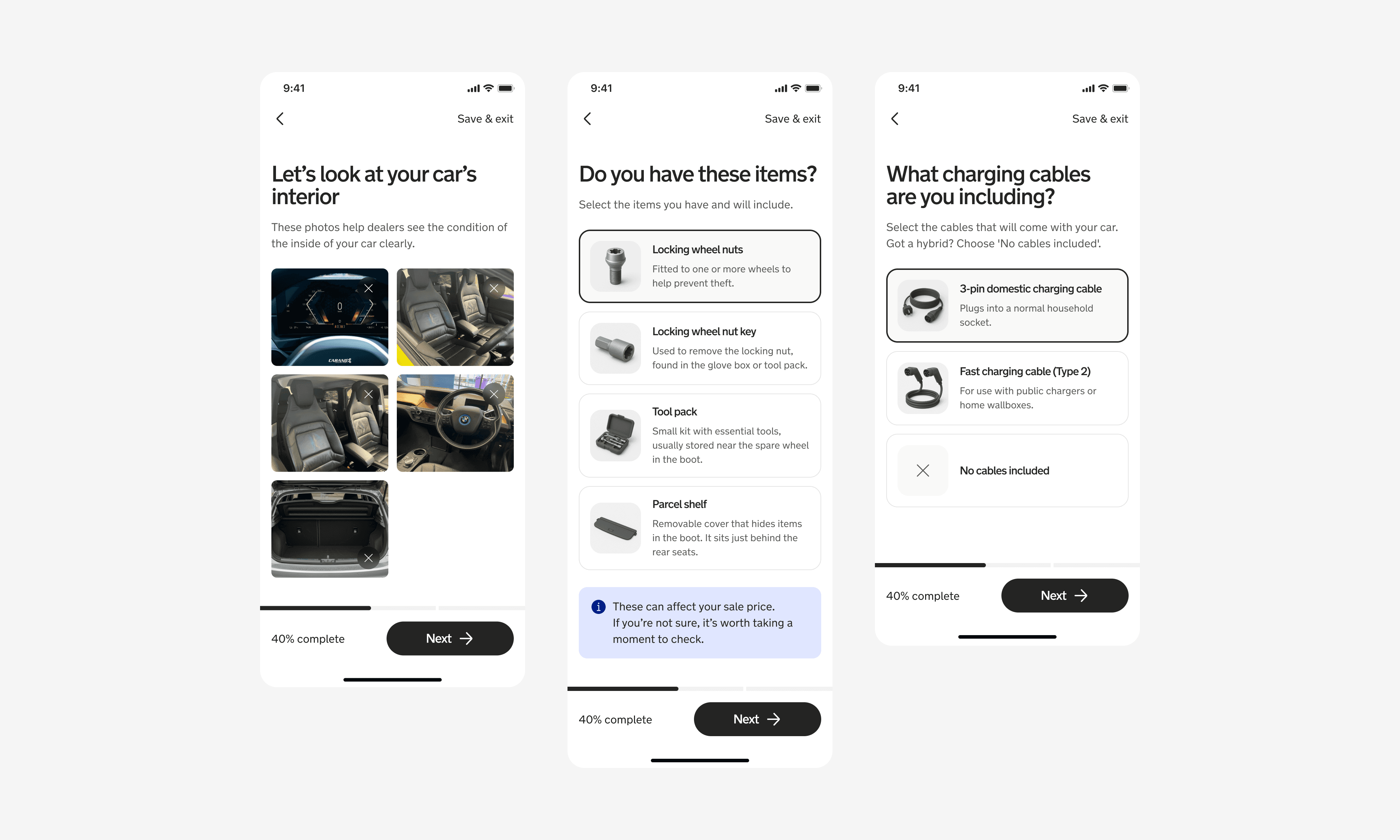
Questions in the right place
- Problem
- Questions about the spare tyre, locking wheel nuts and boot items came before sellers were at the car.
- Decision
- Moved them to the step where the seller is already at the car, with the object in front of them.
- Outcome
- 40 minutes off the average listing.
Looking back
Framing the same questions as milestones did more than cutting questions would have.
The most useful research happened in sellers' driveways, not in the analytics. Next, I'd split first-time sellers from experienced ones at the start and give each a different flow.